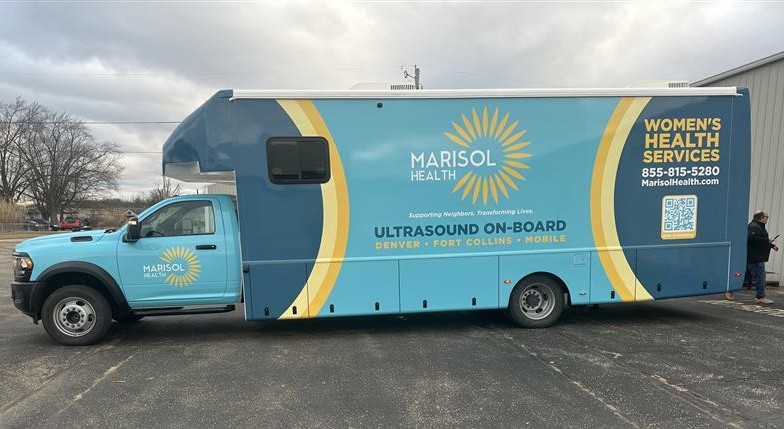
Pregnancy help non-profit Save the Storks continues to expand its lifesaving services with 109 mobile units in place in the U.S., most recently in the abortion destination city of Denver, Colo.
Denver is an abortion destination in a abortion “sanctuary” state catering to out-of-state clients from states where abortion is illegal or more regulated. Colorado is extreme in its permissive abortion laws – with no gestational limits - allowing for a recently opened third trimester abortion clinic.
Save the Storks CEO Diane Ferrero said being in Denver and providing pregnancy help with a mobile unit is “pivotal” given that, according to Guttmacher Institute, there was an 89 percent increase in abortions in the Mile High City following the U.S. Supreme Court’s 2022 Dobbs v. Jackson decision.
While this mobile medical clinic represents the first unit in Denver for Save the Storks, the organization was actually founded in Colorado Springs in 2012, Ferraro explained.
“Our initial focus was on empowering women through mobile medical units or Stork Buses that offer free ultrasounds to those facing unplanned pregnancies,” she said. “We still focus on that while also training churches, reaching women online and equipping pregnancy health clinics.”
[Click here to subscribe to Pregnancy Help News!]
The Denver unit was delivered last fall, the 108th mobile center for Save the Storks. Additional units have been added in Parkersburg, W.Va., Dallas, Texas, and Tacoma, Wash. The Colorado bus is part of a partnership with Marisol Health in Denver, a ministry of Catholic Charities.
Denver’s “dark” stance against life is daunting and the need for a unit in the city was glaring, Ferraro said.
“This is a major milestone for providing holistic life-affirming care in such a dark metro area,” she said.
Denver is place “where companies like Zillow are reportedly paying employees up to $7,500 – per year - to travel to Denver for abortions,” said Ferraro. “The state offers ‘complex family planning’ abortion training through a fellowship program at University of Colorado. The abortion industry has ‘brand experience managers’ who greet women at Denver International Airport, setting up hotel rooms, meals and other trip details around their scheduled abortions.”
Women are traveling hundreds of miles and to get to Denver for abortions, Ferraro said, with sidewalk advocates sharing that they have seen cars with license plates from 10 different states sitting for days in abortion facility parking lots.
It was clear Save the Storks needed to respond.
An additional Stork Bus has been stationed in the Denver suburb of Castle Rock, and a Storks partner in Pueblo, Colo. had been covering the southern portion of the state years before the Denver units were put in place, she said.
Once she steps inside a Save the Storks medical pregnancy help bus, a woman desperate for help with her unplanned pregnancy is treated with compassion in a professional atmosphere, Ferraro said.
Patients "repeatedly share that the mobile clinic itself is nicer and more modern than any doctor’s office they’ve seen,” she said.
Pregnancy tests, ultrasounds, and STD testing services are available immediately on the bus, at that crucial moment when she is ready to walk into an abortion clinic.
“This approach works,” Ferraro said. “Three out of four women facing an unplanned pregnancy choose life for their babies after they step onboard a Save the Storks mobile medical clinic.”
Tweet This: 3 out of 4 women facing an unplanned pregnancy choose life for their babies after they step onboard a Save the Storks mobile medical clinic.
More units will be making their way to cities across the country, as there is more need for these life-affirming services than ever before.
Ferraro said the ministry team at Save the Storks gets requests regularly from pregnancy health clinics and churches. The increased need for these units is in part due to the rise in chemical abortions, Ferraro said. The abortion industry continues to push this abortion pill on college campuses. A death sentence for the unborn is as easy as a woman checking her mailbox, and further, mail-order abortion drugs open the door to coerced abortion.
For those women who change their mind after swallowing the first abortion pill, there is the option of Abortion Pill Reversal (APR). In keeping with Colorado’s abortion extremism, however, it was deemed “unprofessional conduct” for a doctor to prescribe APR, becoming the first state to ban the reversal method. The state is now on the hook for $6 million after a judge blocked the state’s ban on APR.
Save the Storks and its supporting clinics and churches are trying to bring hope to this abortion destination city.
“Pregnancy clinics and churches recognize that mobile takes the pregnancy health movement to areas where women are most vulnerable to the lies of the abortion industry and may not have access to a physical, brick and mortar pregnancy health clinic,” Ferraro said.
“Offering women free on-site diagnostics, medical, and support services, counseling, and referrals provides life-affirming care - and empowers women to choose life,” she said.
Referring specifically to the Denver area, Ferraro said prayers and support from the faith community are essential to allow the ministry to meet the demand in the city of three million residents.
“We need to put more of these life-saving clinics on the road,” she said, “and reach not only the Colorado residents vulnerable to the abortion industry, but the estimated 7,000 women who travel here from other states each year.”
Editor's note: Heartbeat International manages the Abortion Pill Rescue® Network (APRN) and Pregnancy Help News. Heartbeat is currently the subject of two lawsuits brought by state AGs concerning sharing information about APR.