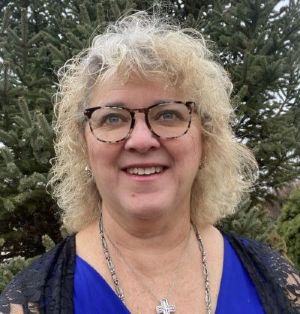
“Women considering abortion should be informed of the possibility that they may experience persistent emotional distress,” Paul Sullins, Ruth Institute senior research associate concluded in a report published in the International Journal of Women’s Health Care.
Experience among pregnancy help organizations involved in post-abortive care has long pointed to a delay in the onset of post-abortion emotional distress.
Most women seeking help are at a minimum five years removed from the abortion experience with one, two or even as much as three decades passing before women (and even men) seek healing through these ministries.
Jennifer Roback Morse, president of the Ruth Institute, discussed the challenges of finding adequate post-abortive research with Dr. Priscilla Coleman, a psychologist who has written extensively about abortion and related issues.
The Ruth Institute is an interfaith international coalition to defend the family and build a civilization of love. Much of its recent focus has been on defending individuals and families against gender ideology as it stands on the truth that the sex of the body cannot be changed.
The Institute uses science in its approach to confirm that Christian moral teachings are the best foundation for happy families and flourishing societies. Abortion research has focused on refuting pro-abortion myths and narratives.
[Click here to subscribe to Pregnancy Help News!]
Sullins’ study extended to women decades after abortion experiences and confirmed that symptoms of Post-Traumatic Stress Syndrome continue long after abortion occurs.
Both Sullins and Morse spoke with Pregnancy Help News concerning this study which directly challenges the pro-abortion narrative that abortion benefits women’s mental health and life development.
From Sullins’ population sample study, the statistics for women experiencing abortion, which is 22.3% of women of childbearing age or 31 million, 44.8% of post-abortive women reported moderate to high post-abortion distress.
Of those who experienced abortion, an estimated 7.5 million or 24.1% reported severe abortion distress, a condition which continues or can worsen over two decades in nearly 1 in 4 post abortive women.
Some of the common symptoms reported by those suffering post-abortion distress include frequent feelings of loss, grief or sadness, frequent thoughts, dreams, or flashbacks. The effects of second-guessing their abortion decision and remaining highly distressed by it.
Nearly half, or 3.4 million women, according to the study show multiple symptoms of post-traumatic stress.
“A hospital or clinic that is doing an intake for a woman who is having or considering abortion, as part of that intake, they should inform her of the possibility of all the negative outcomes of that procedure,” Sullins said.
“This is standard procedure for anything,” he said, citing examples of common procedures such as colonoscopy which require full disclosure of dangers or risks so patients can decide if they’re willing to take the risk.
“Among the risks that women should be informed of/about, is the possibility that they could suffer from persistent emotional distress, and also mental health difficulties,” said Sullins.
Tweet This: Abortion risks that women should be informed on are the possibility of persistent emotional distress and mental health difficulties.
Sullins cited various other countries, like Denmark, which require the disclosure of such information.
“They have a pamphlet they require the woman to receive,” he said. “She sits down with the doctor who explains to her that so many women do have distress following an abortion. She has to meet with a psychologist to make sure she isn’t getting the abortion due to some psychological difficulty that would impair her ability to make a reasoned choice.”
While Denmark is not a pro-life nation, it does recognize the importance of informed consent. In the U.S., such information is rarely made available.
“We really don’t approach abortion with the care and the restraint that happens in other countries,” Sullins.
From Sullins’s deep dive into mental health and abortion literature he has concluded, “There are many studies that do not follow women longer than five years.”
“Compare that with studies that follow women for longer periods of time - you begin to see higher levels of distress emerge that were not expressed earlier,” Sullins said as he pointed out the importance of studies which follow women ten years after an abortion.
“Every research study that has followed women for 10 years or longer finds significant serious emotional or psychological distress in a substantial minority of women following an abortion,” he said.
Sullins acknowledged the pattern of delay in the manifestation of symptoms of distress.
“Research is needed to better understand the risk factors for long-term emotional distress following an abortion and to develop effective therapeutic interventions,” He concluded in the study.
Morse shared her observation of how pro-abortion advocates’ attacks on pregnancy help utilize the same tactics as those who advocate for the continued banning of so-called conversion therapy for individuals suffering with sexual identity confusion.
“In both cases these are people essentially blocking the exits. They created this fantasy world where you can have all the sex you want and nothing bad ever happens,” she explained.
Those who oppose abortion or gender identity, or individuals seeking alternative options to these, are stopped in their tracks.
“Limiting counseling and limiting the work of the pregnancy care centers, that’s what they’re doing,” Morse observed. “They’re shutting off the exits. It’s the same people doing the same sort of things.”
Until a trauma informed approach is more widely embraced, which acknowledges a pattern of the delay in the onset of post-abortion distress, too many women will suffer without help. Furthermore, women will continue to choose abortion without the opportunity to understand the risk.
Sullins warned of the prevalence of medication abortions and how the experience of being at home alone will be a whole different experience of trauma for women, thus setting them up for post-abortion distress again without warning or information about the risks.
Sullins is a retired professor of Sociology from the Catholic University of America and a Catholic priest whose research on abortion studies is posted by Ruth Institute.