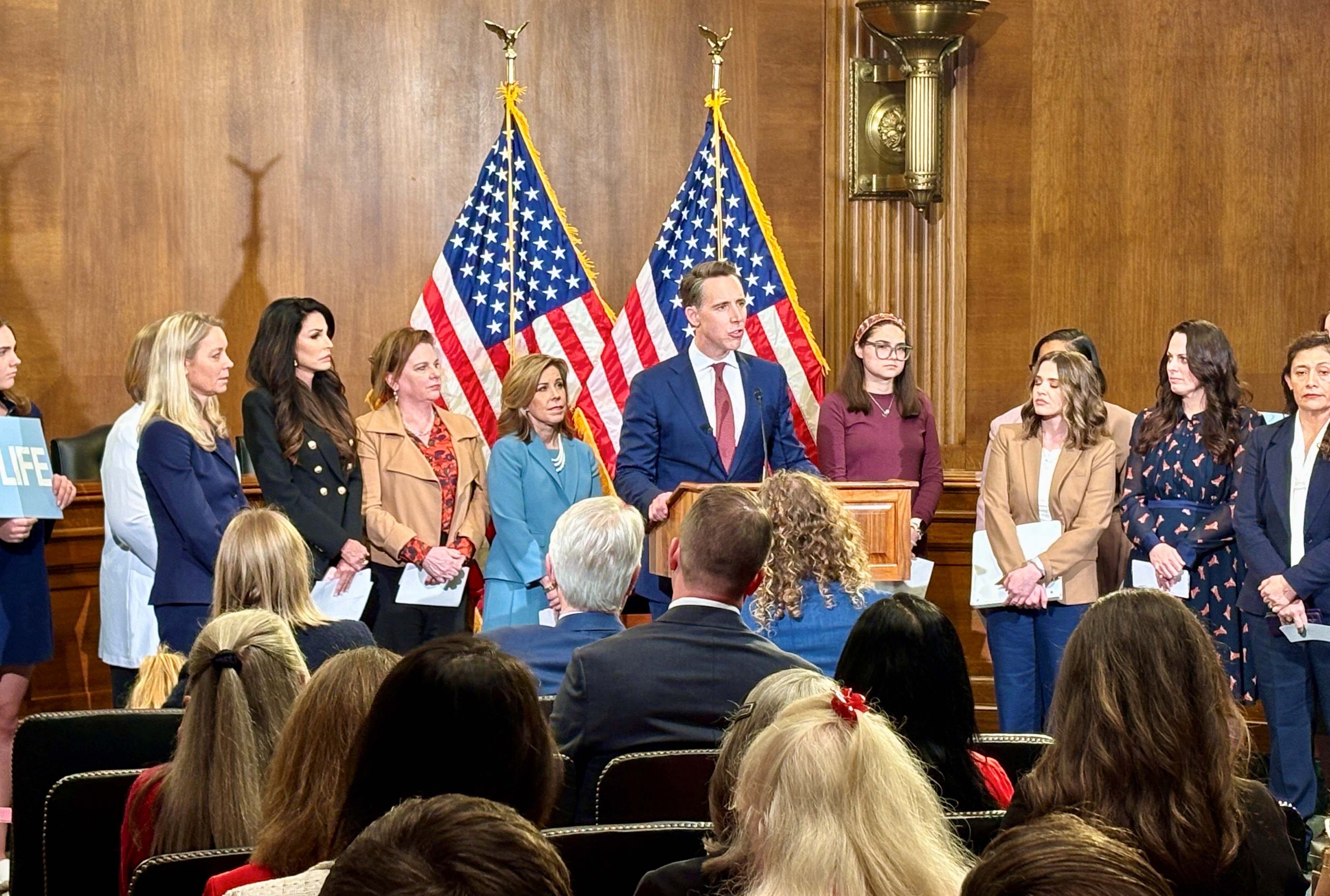
Five women shared their personal experience with chemical abortion pill mifepristone and associated concerns including coerced abortion, medical complications, and deception at a press conference announcing proposed federal legislation to ban the drug and permit women to sue its manufacturers.
U.S. Senator Josh Hawley (R-Mo.) introduced the bill to pull mifepristone from the market and create a private right of action for women harmed by the chemical abortion drug to sue manufacturers for damages.
Hawley hosted a press conference March 11 introducing the Safeguarding Women from Chemical Abortion Act along with women who have taken mifepristone giving their personal accounts of how the abortion pill harmed them. One of the women’s accounts differed from the others in that she was able to reverse her chemical abortion with the Abortion Pill Reversal protocol.
[Click here to subscribe to Pregnancy Help News!]
Chemical abortion drug mifepristone is the focus of criticism because of safety issues and deficient regulation.
The majority of all abortions in the U.S. are chemical abortions.
Mifepristone has a REMS designation, one of around 73 drugs that does, and a small minority of the thousands of prescription medications approved by the U.S. Food and Drug Administration (FDA).
The FDA’s Risk Evaluation and Mitigation Strategies (REMS), is a drug safety program that the FDA can mandate for "certain medications with serious safety concerns to help ensure the benefits of the medication outweigh its risks,” according to FDA policy.
Mifepristone also has an FDA Black Box Warning, the highest degree of safety warning.
The mifepristone REMS have been slackened over the last 10 years under the Obama and Biden administrations, including an initial in-person doctor visit to screen for ectopic pregnancy and other serious conditions, and a follow-up visit to check for life-threatening complications such as internal bleeding and infection. The requirement that abortion providers report non-fatal adverse events to the FDA Adverse Event Reporting System was also eliminated.
Allowing mifepristone to be mailed and dispensed by pharmacies came next, and the Biden FDA permanently removed the in-person dispensing requirement in 2023.
This paved the way for abusers to get chemical abortion drugs on-line and force or otherwise coerce pregnant women into taking them and for abortion activists to sell the drugs across state lines where they may be prohibited by law.
Pro-life and pregnancy help advocates repeatedly call for the FDA to review the safety standards for mifepristone, the review promised by the Trump administration but seeming to drag out.
A report release in April 2025 by conservative think tank Ethics and Public Policy Center (EPPC) found that nearly 11% of women experience sepsis, infection, hemorrhaging, or another serious adverse event within 45 days of taking the drug. The analysis of 865,000 insurance claims of women who were prescribed mifepristone abortions between 2017 and 2023 found that mifepristone is 22 times more dangerous than previously recognized in FDA data.
A more recently released analysis from the EPPC shows that removing the REMS for the abortion pill has increased risks for women, in particular when the drug is prescribed without an in-person medical visit.
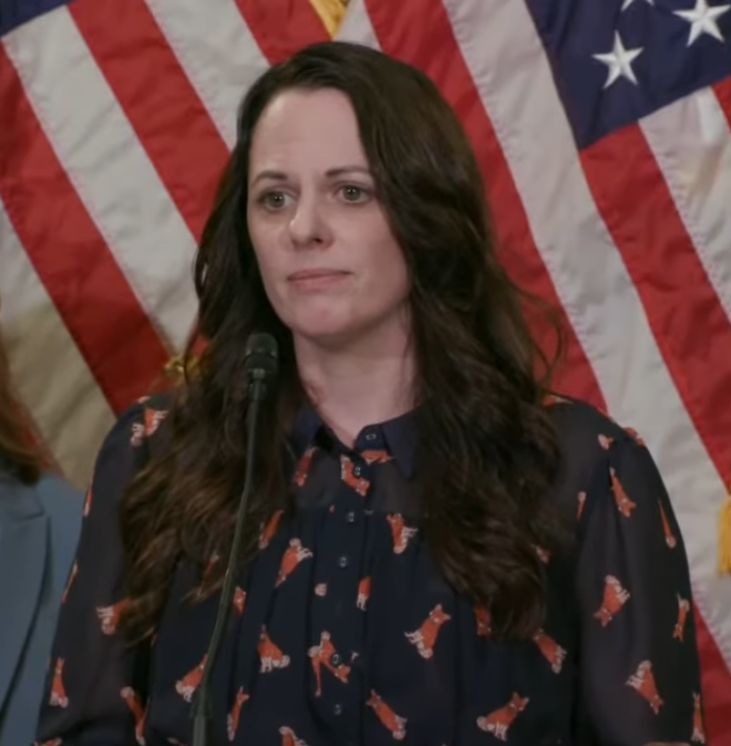
Elizabeth Gillette from Salem, Ore., was harmed by the abortion drug in her early twenties. Gillette was among the women to speak at the Hawley press conference.
The coercion from Planned Parenthood started the moment she called them to make an appointment, she said.
Planned Parenthood would not let her see her ultrasound and told her she was miscarrying.
“I came to Planned Parenthood for help and support and instead they began to coerce the chemical abortion pill,” she said.
Tweet This: I came to Planned Parenthood for help and support and instead they began to coerce the chemical abortion pill - woman harmed by mifepristone
When she hesitated, the doctor grew angry at her for holding up the schedule.
The doctor said if Eliabeth didn’t go through with the abortion there’d be no guarantee she would get her another appointment before the 10-week cut off for mifepristone use – even though they told her she was already miscarrying.
Elizabeth felt she had to take the pill as the only way she could leave.
At home she experienced sweats, vomiting, and profuse bleeding.
Elizabeth had the horrible experience delivering a perfectly formed amniotic sack with her baby floating inside with recognizable eyes, limbs, and earbuds.
“They didn't tell me that there were any complications regarding this pill,” she said. “They did not tell me that there was a Blackbox warning. They did not tell me that people had sepsis or anything else. There was no follow-up care.”
Instead of relief she’d been promised she has had nightmares and suffers still from post-traumatic stress disorder.
“This is not safe,” Elizabeth said. “This is not easy. This is not something that our women need to be experiencing.”
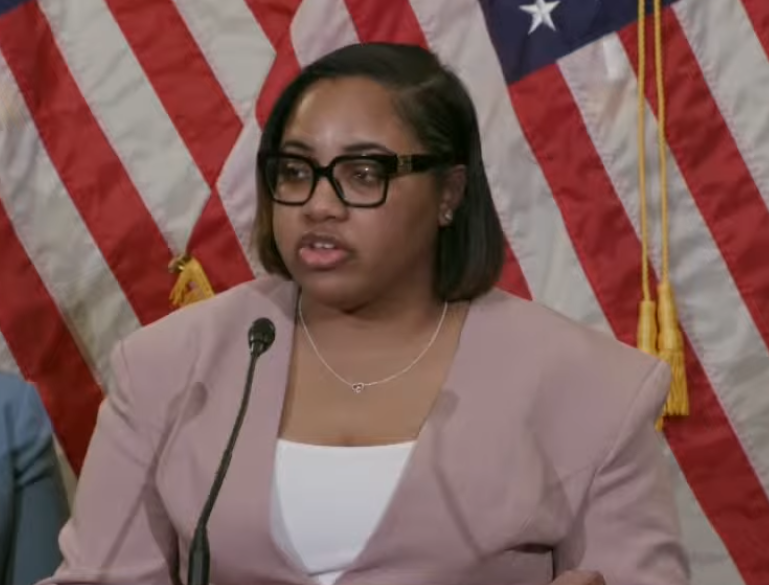
Shanyce Thomas is a nursing student attending school in Maryland.
She said the description of the abortion pill as a simple, safe solution, something routine, quick, and low risk, was not her reality.
“For me, the abortion pill nearly cost me my life, and the consequences will stay with me forever,” said Shanyce.
After taking the abortion pills she had gotten at Planned Parenthood Shanyce was in severe pain.
Upon returning to Planned Parenthood two days later they told her that everything was fine and sent her back home.
She was lethargic, pale, and gray in color. Her father rushed her to the emergency room.
Shanyce had developed a severe infection behind her uterus that went undetected until it became life-threatening.
She was a life support system for people whose heart and lungs are failing, something people usually do not easily survive.
Shanyce was in a medically induced coma for a month, during which time she required several blood transfusions due to severe blood loss and complications from the infection. The doctors had to perform a partial hysterectomy.
“In one moment, my ability to carry children in the future was taken from me, not by choice, but by necessity to save my life,” Shanyce said.
“I took the abortion pill because I was scared and pressured by my boyfriend to end my child life,” she said. “In that process, I almost lost my life as well.”
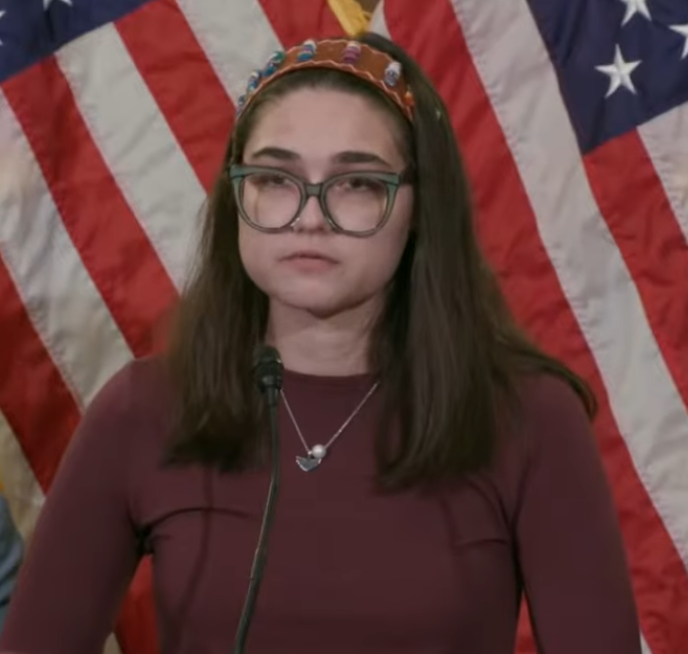
Rosalie Markezich from Louisiana is in the process of pursuing litigation against the FDA over the safety regulations for mifepristone.
In October 2023 Rosalie’s boyfriend at the time coerced her to take abortion drugs that he ordered online from California.
She did not want the abortion and told her boyfriend so repeatedly.
“But that did not stop him from ordering FDA approved drugs without my consent,” she said. “It did not stop him from having the drugs mailed directly to my home, even though it is against the law in Louisiana.”
“Nor did it stop him from cornering me in a car and telling me that I'd ruin his life if I kept my baby,” said Rosalie. “And it certainly did not stop him from becoming so angry that I had feared for my life and my child's life.”
Rosalie’s boyfriend watched her swallow the drugs and when she could finally get away, she rushed to the bathroom to try to throw them up.
But she was unsuccessful.
Rosalie began to bleed heavily, and she knew she had lost her baby.
“I spent the rest of that night on a towel in the garage soaked in blood,” she said. “The blood did not stop for over a week, but the mental agony has never left.”

Rebekah Hagan experienced a chemical abortion as college student in California. She was living at home at the time with her parents and her one-year-old son.
It felt impossible for her to have another baby.
She began searching for an abortion.
“I heard about the abortion pill,” Rebekah said. “It was described as simple, as private, as safe, as natural, as less expensive, as easier to hide.”
Rebekah said she had no idea what she was getting into, with no counseling, no waiting period. She was given a quick explanation at a local abortion provider where she was told just that it would be a two-step process she would begin in the facility and finish at home, that it would just end and expel her pregnancy.
“Women are made to believe that you can just magically become unpregnant,” Rebekah said. “And that's not true.”
The relief that the abortion promised did not come, she said.
Consumed with regret, Rebekah sobbed in the abortion facility parking lot.
Still, she had an overwhelming desire to protect her baby.
Rebekah found help accessing Abortion Pill Reversal (APR).
APR entails prescribing progesterone to counter the effects of mifepristone. It is an updated application of a treatment used since the 1950s to combat miscarriage.
The Abortion Pill Rescue® Network (APRN), managed by Heartbeat International, is a network of nearly 1,500 healthcare professionals, pregnancy centers and hospitals worldwide that administer the APR protocol.
Statistics show that to date more than 8,000 lives have been saved through APR.
The protocol worked in Rebekah’s case and her son was born later that year, one of the first babies saved by APR. He’s now 13.
“Zechariah is healthy,” Rebekah said, “He's thriving.”
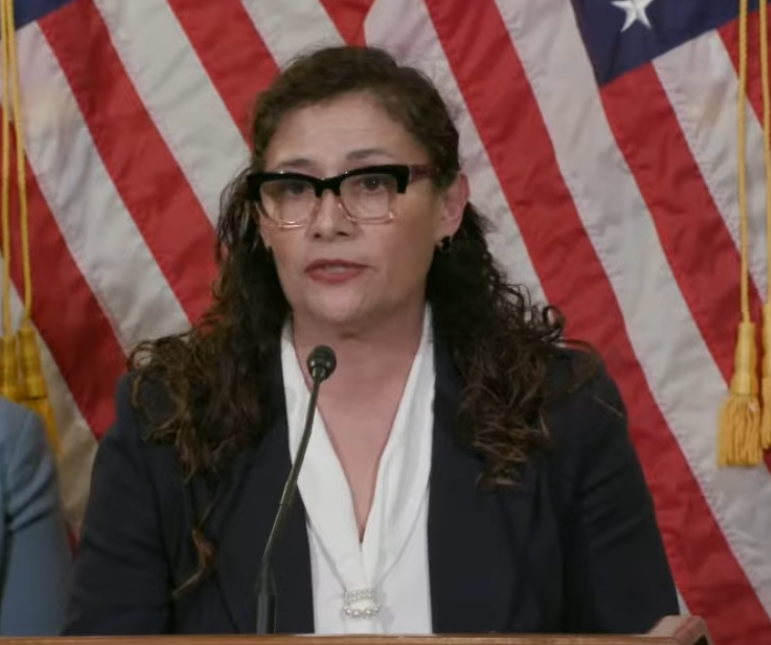
Mayra Rodriguez is a former Planned Parenthood center director from Phoenix who saw firsthand how the abortion industry's tactics deceived and harmed women, and she faced retaliation for speaking out.
Mayra was trained and trained others during her 17 years working for Planned Parenthood to tell women chemical abortion would be minor and over with in two days.
After she became the director of the biggest facility in Arizona, she started seeing things she couldn’t reconcile.
Being instructed to tell women who would say they felt like they were dying to place a heating pad on their pain, put their feet up, take ibuprofen, and they’d be fine, changed everything, as did telling them to flush their children down the toilet, but not to look.
“I dare anyone pro-abortion to face women and tell them to their face it's still okay,” Mayra said.
After complaining about wrongdoings, complications going unreported, falsified patient charges, her employer not caring about the women, Mayra was fired. She would later win a wrongful termination lawsuit.
"Abortion is not something that should be on our streets,” Mayra said. “Abortion should not be in our mailboxes.”
“The science is clear,” Hawley said at the press conference. “The chemical abortion drug is inherently dangerous to women and prone to abuse. Yet major companies like Danco Laboratories are making billions off it.”
Hawley’s Safeguarding Women from Chemical Abortion Act would:
- Withdraw the FDA’s approval of mifepristone for abortion.
- Make distributing and labeling mifepristone for pregnancy termination violations of the Federal Food, Drug, and Cosmetic Act.
- Create a private right of action for women harmed by chemical abortion to sue manufacturers for damages.
Congresswoman Diana Harshbarger (TN-01), a pharmacist, will introduce companion legislation in the U.S. House.
“Congress must act now to protect the health and safety of women.” Hawley said.
Editor's note: Heartbeat International manages the Abortion Pill Rescue® Network (APRN) and Pregnancy Help News. Heartbeat is currently the subject of two lawsuits brought by state AGs concerning sharing information on Abortion Pill Reversal.