In 2023, New Jersey Attorney General Matthew Platkin issued an investigatory subpoena to First Choice Women’s Resource Centers, a pregnancy help organization, allegedly probing whether the nonprofit had misled clients and donors. First Choice responded by filing a federal lawsuit, claiming the subpoena violated its First Amendment rights.
While lower courts dismissed the case as unripe, meaning that no harm has yet occurred, First Choice has now asked the Supreme Court to allow pre-enforcement federal review.
The case, First Choice Women's Resource Centers v. Platkin, carries significance beyond New Jersey.
Reports indicate that roughly 17 state attorneys general are coordinating efforts to scrutinize pregnancy centers in their states, frequently using investigatory subpoenas.
By leveraging these burdensome, time-consuming, and expensive investigatory subpoenas, state attorneys general can engage in fishing expeditions into the records of nonprofit organizations whose political, religious, or ideological viewpoints they oppose. Multiple state attorneys general have already used this lawfare tactic against pregnancy help organizations, making the Supreme Court's upcoming decision in the First Choice case significant for those who operate in states where the attorney general is opposed to their mission.
[Click here to subscribe to Pregnancy Help News!]
Legal issues at stake
At its core, the First Choice case raises a technical but consequential question: Can a group subject to a state investigatory subpoena bring a federal lawsuit asserting constitutional claims - particularly the First Amendment rights of free speech, association, and donor privacy - without first defying the subpoena and risking contempt in state court?
Groups such as First Choice find themselves in a legal Catch-22.
If they challenge a subpoena immediately, federal courts may dismiss the case as unripe, reasoning that no harm has yet occurred. If they wait until a state court ruling imposes actual harm, federal courts are barred from reconsidering those claims. The result is a scenario in which organizations may never have their federal constitutional claims fully heard.
Oral argument
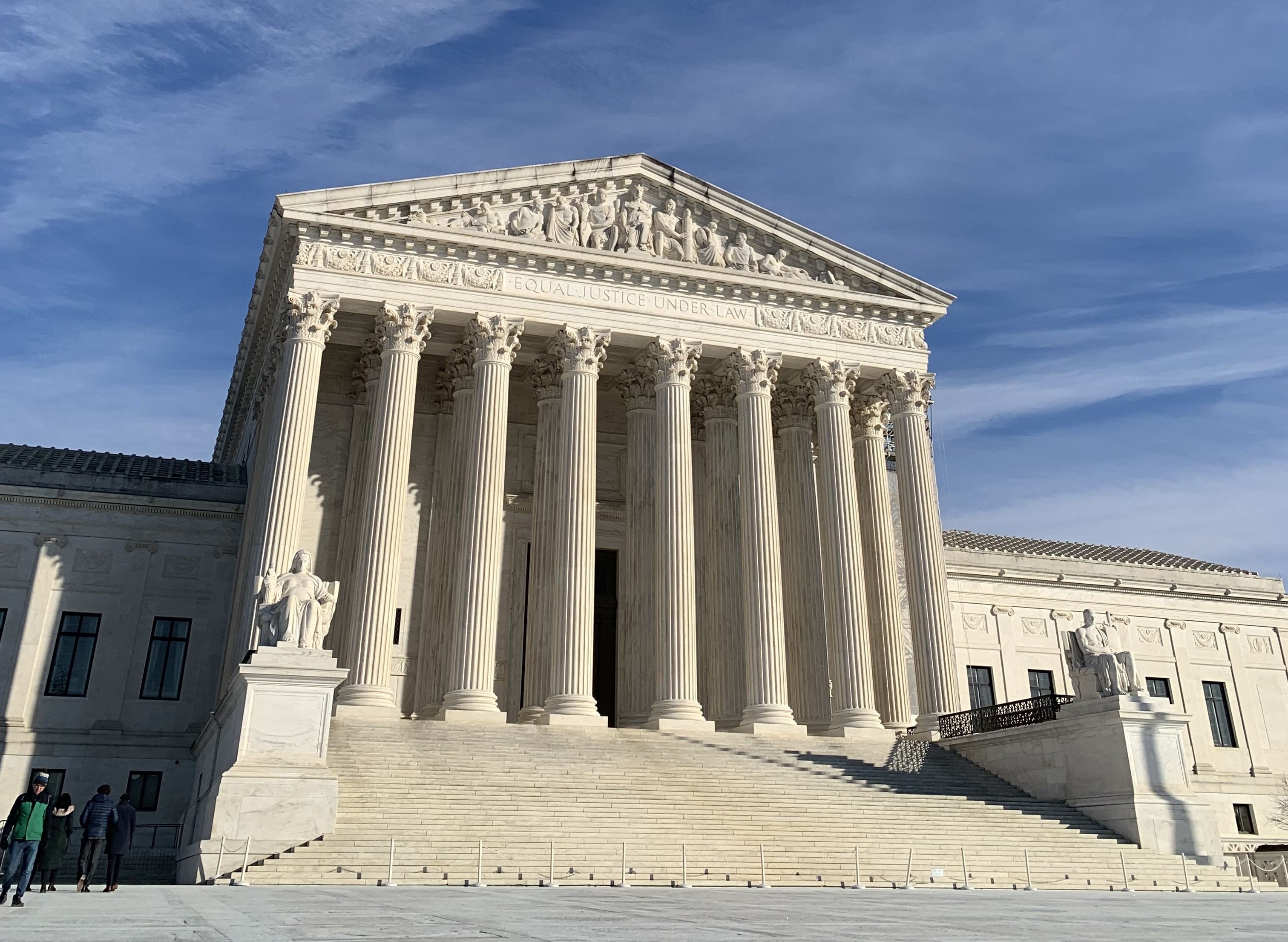
While the cold rain of December 2 hardly made it pleasant to stand outside the Supreme Court, more likely the lack of protestors outside the courthouse reflected the realities of this case.
The merits stage of the case drew an unusually high level of amicus support: 42 briefs were filed. Perhaps more unusual was how lop-sided the amicus support was. Of those briefs, 39 backed First Choice, including a brief from the ACLU. Only three were filed in favor of New Jersey.
Even those who are opposed to pregnancy help recognized here that a thorn planted in another’s path may pierce your own heel.
During oral arguments, the Supreme Court focused less on the underlying investigation and more on jurisdiction and ripeness. Observers noted that a majority of justices appeared sympathetic to First Choice’s argument that state subpoenas demanding donor information can inflict immediate constitutional injuries by chilling speech and association.
Key themes emerged from the proceedings
Donor privacy and chilling effects:
Justices expressed concern that forcing organizations to wait for state enforcement - or disclose donor information before constitutional questions are resolved - could suppress free speech and association. Justice Elena Kagan and Chief Justice Roberts asked pointed questions about the real-world consequences for donors.
Skepticism toward state arguments:
Several justices challenged New Jersey’s claim that the subpoena is non-self-executing and poses no immediate harm, pressing whether this technical distinction matters when enforcement pressure remains. The question of a non-self-executing subpoena, which means the issuing authority cannot directly enforce it or impose penalties and must first go to a court and get a separate court order to compel compliance, is central to the case.
Questioning of motive and scope:
Justices scrutinized the breadth and purpose of the subpoena. In one notable exchange, Justice Clarence Thomas questioned whether the investigation constituted a fishing expedition.
As the Supreme Court weighs these arguments, the case could have far-reaching implications for nonprofit organizations nationwide, especially those providing pregnancy-related services, by clarifying when federal courts can intervene to protect constitutional rights before state enforcement takes place.
Tweet This: The First Choice Women's Resource Centers v. Platkin case has significance for nonprofits nationwide - especially those in pregnancy help.
A decision is expected in the spring or summer of 2026.
Editor's note: Heartbeat International manages Pregnancy Help News. Heartbeat filed an amicus brief in First Choice Women’s Resource Centers v. Platkin in support of First Choice.